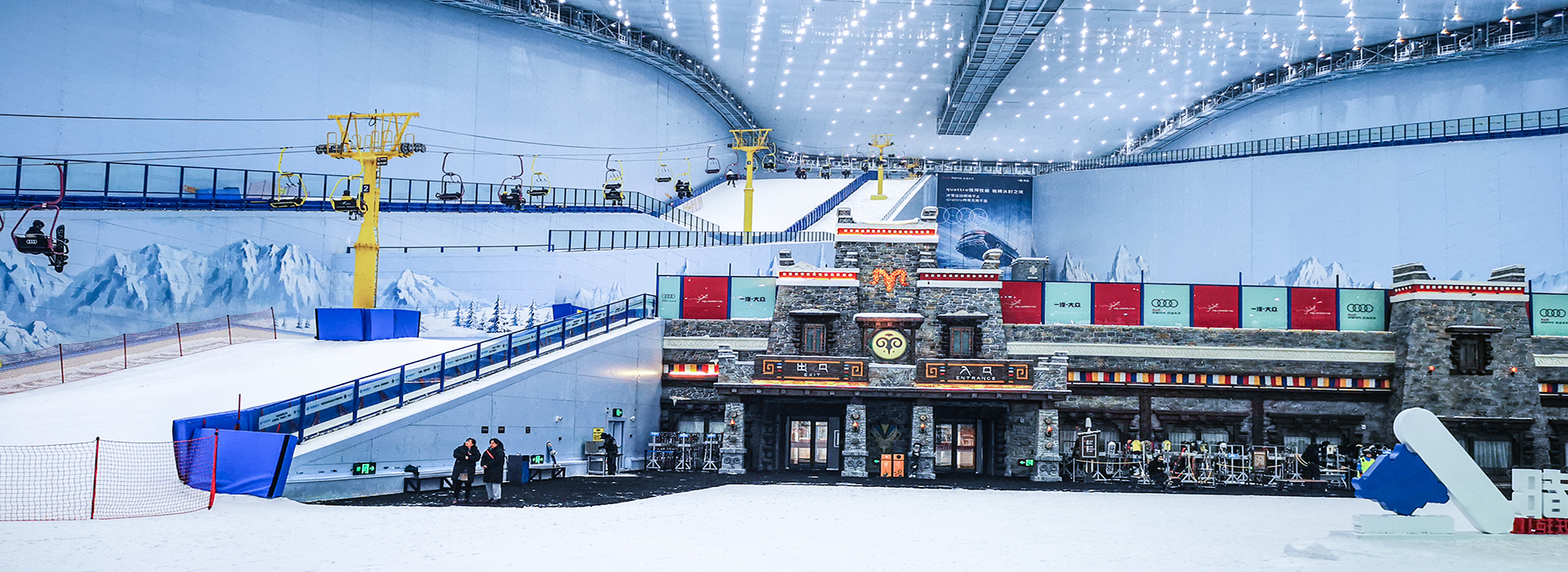
A snowfall machine and a snowmaking machine are not the same type of equipment. Simply put, the former produces flake-shaped snowflakes and creates an airborne snowfall effect, which melts as soon as it lands; the latter produces granular snow and is used for piling and laying ski slopes. Before investing in a snow house, ice and snow park, or indoor ski resort, first clarify this boundary, then discuss low-temperature conditions, supporting works, and budget. For equipment types, you can first refer to indoor snowmaking machines, snow houses, and real ice rink equipment in our main products.
Conclusion first: snowfall machines are for ambiance, snowmaking machines are for snow coverage
The acceptance criteria for the two types of equipment are different. For ambiance equipment, evaluate snowflake form, falling range, visual effect, and landing condition; do not accept it based on snow accumulation depth. For snow-laying equipment, evaluate granular snow, snowmaking capacity, snow layer uniformity, and subsequent grooming conditions; do not judge whether it can meet sliding requirements based only on “there is snow on site.”
Also distinguish the relationship between the low-temperature environment and the equipment itself. The fact that the equipment can produce snow does not mean the snowflakes will maintain the expected state in any hall. Temperature, humidity, airflow, personnel activity, and meltwater collection all affect the on-site effect. Check the site before purchasing; do not buy equipment first and then add conditions.
See the difference between snowfall machines and snowmaking machines in one table
| Comparison item | Snowfall machine | Snowmaking machine |
|---|
| Snow output form | Flake-shaped snowflakes, emphasizing natural drifting | Mainly granular snow, emphasizing pileability and laydown |
| State after landing | Melts on landing; not used to form a stable snow layer | Can form a snow layer and be replenished and groomed to slope requirements |
| Environmental requirements | Requires a low-temperature environment, plus verification of airflow, humidity and water supply | Requires project-specific verification of temperature and humidity, power and water, water quality and layout conditions |
| Main applications | Snow rooms, ice and snow parks, rink activity areas and other ambience scenarios | Indoor ski venues, slope snow laying and daily snow replenishment |
| Acceptance focus | Flake snow, coverage area, visual effect, state after landing | Granular snow condition, snow-laying capability, snow layer uniformity |
| Common misuse | Being asked to lay ski slopes or maintain a skiable snow layer | Being treated as a close-contact ambience device, ignoring granular snow and site conditions |
| Cost basis | Estimated per single point or multi-point linked system; low-temperature retrofits quoted separately | Estimated together with power and water, conveying, grooming and other supporting works |
This table can be used directly in requirements meetings. First have operations, engineering and the equipment supplier confirm whether the goal is ambience or a ski slope, then confirm whether standing water on the ground is allowed, whether close human contact with snow is required, and whether there are ongoing snow replenishment needs. If the requirements are not written clearly, later parameters and quotes will not be comparable.
Snow quality and environmental requirements determine whether the equipment can be used
The difference between flake snow and granular snow is not a minor cosmetic one. Flake snow is light and falls in a way that is closer to a natural scene, but it melts on contact and cannot create slope depth. Granular snow is intended for accumulation and grooming, with subsequent considerations for snow-layer distribution, compaction, finishing, and resupply cadence. Treating the two snow types as interchangeable often leads to equipment that runs but operating goals that are not met.
This is also why snow-fall machines must verify the low-temperature environment. Do not ask only about equipment power and coverage; also ask what conditions the flakes encounter from the snow outlet to the guest activity area. Airflow in the space can change the fall direction, floor materials affect meltwater handling, and lighting, air vents, and entry/exit points can also interfere with the effect. Snowmaking machines also require site verification; in particular, do not equate snow output directly with usable snow on the slope.
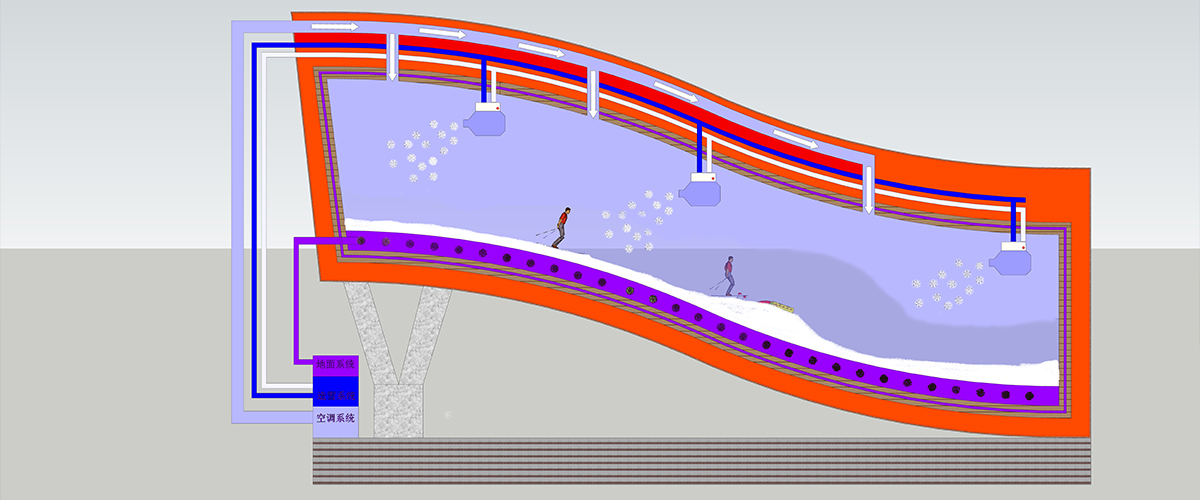
From an engineering standpoint, we recommend splitting acceptance into two steps. First, conduct an empty-venue snow test to check snow form, coverage, and operating stability. Second, recheck under actual operating conditions, adding lighting, air vents, personnel circulation, and floor drainage conditions. Do not promise snow depth in ambiance areas, and do not rely on a short snow-output video for slope areas.
Look at cost by tier, not just per-unit price
The procurement budget for snow-fall machines can be tiered by single-point ambiance and multi-point synchronized setups, while snowmaking equipment is tiered by snow-laying task and supporting scope. For preliminary planning estimates, single-point ambiance equipment typically ranges from CNY 10,000-50,000, multi-point synchronized equipment typically ranges from CNY 50,000-150,000, and snowmaking equipment for snow laying typically ranges from CNY 150,000-400,000. These ranges are for preliminary screening only, vary with configuration, and are ultimately calculated on a project basis.
Equipment cost is not total investment. Low-temperature space retrofit, envelope insulation, refrigeration and dehumidification, water supply and drainage, electrical controls, safety protection, and maintenance access must all be listed separately. If the project includes these systems, overall investment varies with configuration and is ultimately calculated on a project basis. When comparing proposals, align equipment quantity, control method, installation scope, and supporting boundaries, so that one proposal does not quote only the main unit while another includes system engineering.
Three selection questions
First, if your venue is a snow room, an ice and snow park photo spot, or an ice rink activity area, and you only need snow falling in the air without requiring accumulated snow depth on the ground, choose a snowfall machine. First confirm the low-temperature environment, then design the snowfall coverage area, personnel circulation, floor slip resistance, and meltwater collection together. Do not commission it based on “how thick a layer it can lay per hour.” It delivers a visual effect; melting on landing is normal behavior, and snow volume on the snow trail should not be used as a performance metric.
Second, if your venue is an indoor ski slope and requires snow trail laying, daily snow replenishment, and must withstand skier traffic, choose a snowmaker. Size the equipment based on the snow trail task, target snow layer, snow replenishment frequency, and opening schedule, and include water, power, conveying, grooming, and maintenance conditions in the plan. Do not substitute flake snow effects for snowmaking capacity. The project scope can be defined with reference to the indoor ski slope business segment, and then the division of equipment and engineering responsibilities can be determined.
Third, if your venue needs both a snowfall atmosphere and a skiable snow trail, use a division of labor between the two types of equipment; do not force a choice of one over the other. The snowmaker is responsible for snow trail laying and replenishment, and the snowfall machine is responsible for designated atmosphere areas. Verify low-temperature, water, power, drainage, and control conditions separately for the two systems, and schedule operating hours separately as well. Split the budget between equipment and systems engineering to avoid saving on one machine and forcing one category to take on unsuitable tasks over the long term.
Common scenario: a 1,200-square-meter indoor ice rink
For a 1,200-square-meter indoor ice rink, if you plan to add a snowfall effect, first verify the atmosphere equipment separately from the rink refrigeration. Estimate the ice surface cooling load at 350-450 W/square meter, roughly corresponding to 420-540 kW of cooling capacity; annual average overall power consumption can be understood as approximately 1.7 kWh/square meter·day. For every 1 m increase in ceiling height, the cooling load increases by approximately 3-5 percentage points; do not raise the space arbitrarily for visual effect.
In this scenario, the snowfall machine only handles the atmosphere task within the defined area; granular snow spreading equipment should not replace it for long-term operation. Ice thickness must also be controlled according to use: typically 30-40 mm for domestic operation, and 40 mm for figure skating. Snow that falls onto the ice surface must be included in the cleaning and ice maintenance process. Cover with insulating blankets from 22:30 to 09:30 at night; the ice surface load can drop from about 220 kW to about 25 kW, saving about 700 kWh per day. The after-hours equipment strategy should be coordinated with this energy-saving measure. When reviewing ice and snow case studies, also judge by this kind of use and system boundary, and do not directly copy configurations.
Conclusion: define the use first, then the equipment
The conclusion is clear: snowfall machines handle atmosphere, snowmaking machines handle ski slopes — draw the line by use first. Next, write snow quality, low-temperature environment, coverage area and whether accumulation is required into the requirements table, then have the supplier develop a plan based on the same boundaries. Break the budget into equipment, low-temperature retrofit, water, power and drainage, control and safety protection; amounts vary with configuration and are ultimately calculated per project. Before acceptance, conduct on-site snow trials: in the atmosphere area, check flake snow and how it lands; in the slope area, check granular snow and the spreading result.