Let's start with the conclusion: snow machines must be quoted by application scenario, not by "how much per unit" alone. A mall creates ambiance, a scenic area runs operations, and film production shoots footage — each has different requirements for coverage, snow output, noise, and water and power, and each calls for a different number of units and control method. When discussing indoor snow machine pricing, first lay out the layout drawing, daily operating hours, and water supply and drainage conditions, then compare equipment, control, and installation and commissioning costs. A per-unit price divorced from these conditions has limited reference value.
Three Scenarios, Three Different Results
They may all be called snow machines, but the mall configuration emphasizes intermittent operation, low disturbance, and flexible placement. It typically serves an atrium, stage, or event area, and does not require snow falling across the whole venue at once. Noise, floor slip resistance, cleaning, and business hours matter more than simply maximizing snow output.
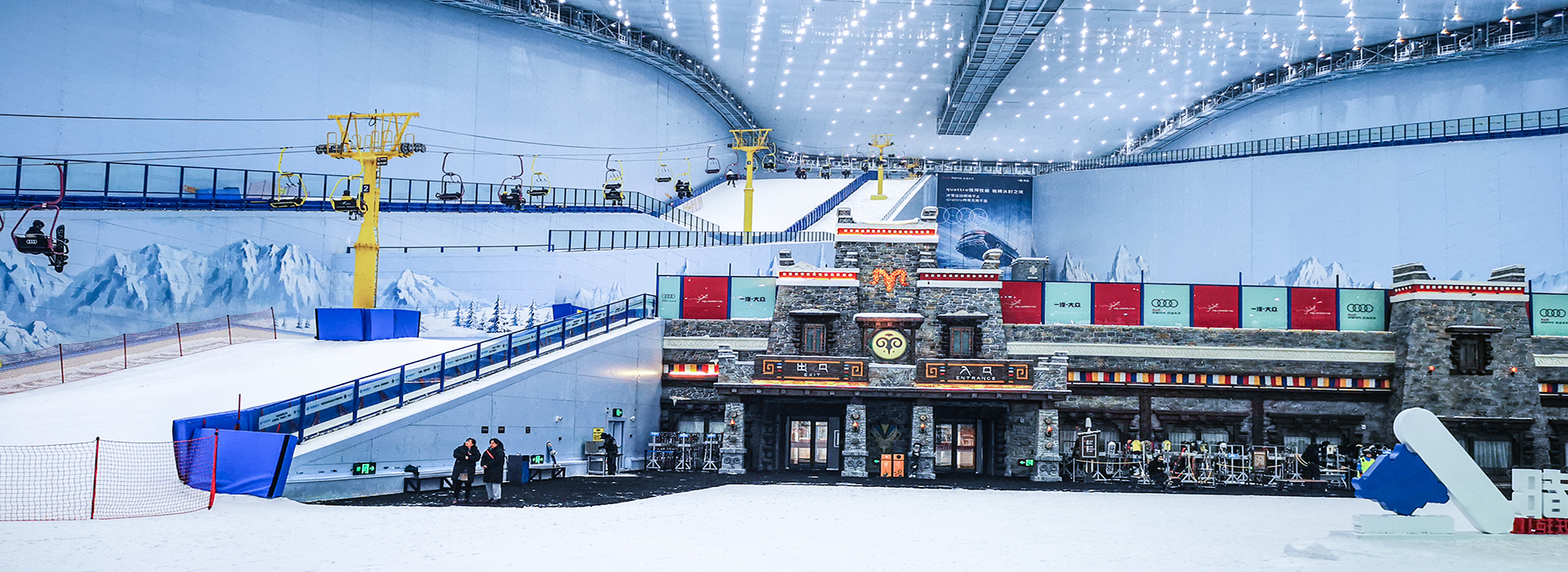
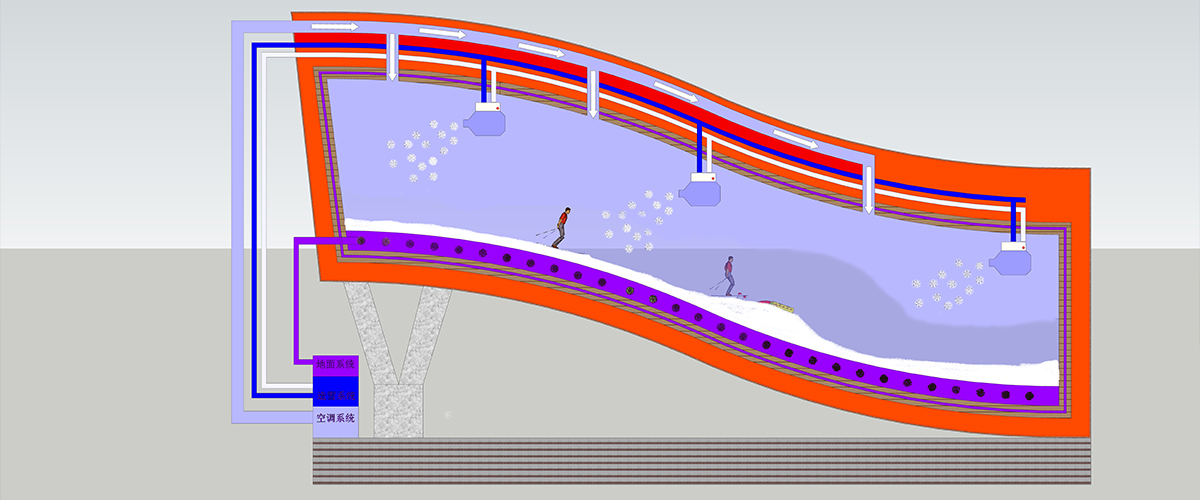
Scenic areas and indoor snow parks emphasize continuous operation. Units should be laid out by zone along visitor flow, taking into account multi-unit linkage, grouped start and stop, water makeup and filtration, drainage, and routine maintenance. The equipment is only one part of the system; ceiling conditions, HVAC airflow, and cooling and dehumidification capacity must all be verified together. For large spaces, you can draw on the spatial approach covered in our indoor ski resort business section — handle the environment first, then the snow effect.
Film production configurations emphasize controllability and repeatability. Snow output must be adjustable, the drop zone must be stable, and start and stop must follow the shooting schedule; when recording sound on set, equipment noise and vibration must be controlled separately. For model categories, you can start with our indoor snow machines, snow rooms, and real ice rink equipment product information, but final selection still depends on the shot and on-site conditions.
Configuration Comparison: Coverage, Snow Output, Noise, Water and Power
When selecting a snow machine, do not compare only the coverage area printed in the brochure. Installation height, crosswinds, HVAC supply and return air, and barriers all change the snow landing zone; once the snow reaches the floor, you also have to deal with meltwater, slip resistance, and cleaning.
| Comparison item | Mall event type | Scenic area operations type | Film & TV effects type |
|---|
| Coverage method | Usually calculated per single local point; the area depends on the model and installation height | Usually calculated by multiple zones and networked multiple units; you cannot simply divide the full venue area by single-unit coverage | Usually only the effective camera frame area is calculated; no blind spreading outside the frame |
| Snow volume and control | Small to medium atmospheric snow volume, intermittent operation, scheduled start/stop | Adjustable snow volume, zoned control, with emphasis on continuous operation and consistency | Fine adjustment of snow volume and landing area, with emphasis on repeatability; usually requires external control connection |
| Noise requirements | Usually requires low interference, avoiding impact on business operations and announcements | Impact controlled through rigging location, equipment isolation, and operating periods | Stricter requirements for synchronous sound recording; must be verified against specific working conditions |
| Water and power conditions | Nearby water supply, drainage, and suitable power circuit; specific capacity depends on model | Usually requires water makeup, filtration, drainage, maintenance space, and zoned piping | Water source and power supply must be stable, with reserved control signals and shooting coordination conditions |
| Equipment price range (estimate) | Single unit or single point usually in the range of RMB 20,000-60,000 | Single group usually in the range of RMB 60,000-150,000; multi-point networking is usually in the hundreds of thousands of RMB | Estimated according to effect and control configuration, usually in the range of RMB 100,000-300,000 |
The above is estimated only by equipment tier. Water and power modifications, rigging, piping, control systems, and installation and commissioning will all cause differences; prices fluctuate with configuration and are ultimately calculated per project. If a quotation lists only one total equipment price, additional charges for control interfaces and construction conditions can easily be added later.
Four Things to Confirm Before a Snow Machine Manufacturer Quotes
First, coverage boundaries. Supply floor plans, elevation drawings, available rigging points and equipment service locations, and mark the audience area, the stage area and any equipment zones where snow must not fall. Ask the manufacturer to define the "effective snowfall zone" and the "potential drift zone" separately.
Second, water, power and snowmelt. Verify feed-water quality, makeup water method, drainage path and electrical supply conditions. Indoor snowfall does not mean the water simply disappears on its own, so floor material, slope, slip resistance and cleaning frequency all have to be built into the plan.
Third, noise operating conditions. Require the documentation to state the measurement conditions and the operating mode used, not just a single static figure for comparison. For shopping malls, the key concern is subjective disturbance during business hours; for film and TV projects, the noise must be re-verified on the actual shooting set.
Fourth, controls and acceptance. Specify timers, zoning, snow volume adjustment, fault alarms and external control interfaces, and agree on acceptance procedures for no-load running, snow-loaded running and continuous operation. When requesting quotes from snow machine manufacturers, you can cross-check ice and snow case studies to confirm your space type, but do not use a case study directly as the basis for your own quotation.
Three Sizing Questions to Answer
If your venue is a shopping mall atrium used only for short periods on holidays, on the hour or during stage performances, choose the event configuration.Give priority to noise, snowfall boundaries, drainage and floor slip resistance, and keep the control approach focused on timers, local operation and easy removal after the event. Do not size snow output for all-day operation, and do not build an oversized piping network for a single point; equipment prices typically fall in the range of RMB 20,000-60,000, with installation conditions quoted separately.
If your venue is a scenic attraction or an indoor ice and snow park with multiple reception periods each day and a need to rotate snow across several zones, choose the operational networked configuration. Focus on continuous operation, zone control, water makeup and filtration, maintenance access, and replacement of wear parts; do not tie all zones to a single start/stop switch. First determine the number of units based on the point layout and operating schedule, then verify the matching of water and electrical modifications with refrigeration and dehumidification. Costs vary with configuration and are ultimately calculated per project.
If your venue is a film studio, broadcast studio, or indoor space requiring close-up shooting, choose the effects-focused configuration. Prioritize whether snow output adjustment is smooth, whether the same setting can be repeated, whether the drop zone is stable, and whether it can connect to a control console; when synchronous sound recording is used, include noise testing in acceptance. Do not select a large model based solely on coverage area; snow outside the camera frame usually has no value and instead increases cleanup and humidity handling work.
How to verify a general scenario: a 1,200 sq m indoor ice rink
For a 1,200 sq m indoor ice rink, if snow is only needed to enhance the opening show or hourly events, it is usually not necessary to configure for continuous heavy snow across the entire venue. First define the performance area, audience sightline area, and no-snow zones, then determine the points, groups, and control programs based on event duration; the number of snowfall machines is determined by the effective drop zones and operating method, not directly by the total ice surface area.
Water and electrical calculations must be kept separate from the ice rink's existing systems. For an ice surface of this size, estimate the cooling load at 350-450 W/sq m, roughly corresponding to 420-540 kW of cooling capacity; this is the basis for ice surface refrigeration and cannot be used directly as the basis for power distribution or water use of the snowfall equipment. Ceiling height must also be reviewed: for each 1 m increase in ice rink ceiling height, the cooling load increases by approximately 3-5 percentage points; for snowfall effects, a high space also changes installation conditions, snow drop paths, and the impact of HVAC airflow.
Therefore, for this scenario it is more appropriate to first prepare a point layout plan and conduct an operating test before deciding whether to add equipment. Break the quotation down into equipment, control, piping and electrical work, lifting and installation, and commissioning and acceptance; costs vary with configuration and are ultimately calculated per project.
Conclusion
First determine the configuration tier based on mall, scenic attraction, or film and TV use, then ask the snowfall machine manufacturer to quote based on the point layout drawing. For malls, first verify noise, drainage, and business hours; for scenic attractions, first verify continuous operation and zone control; for film and TV, first verify snow output repeatability, noise, and control interfaces. Require the quotation to break down equipment, installation and commissioning, water and electrical modifications, and the control system, and clearly state the coverage boundaries and acceptance method. Do not compare unit prices alone; compare operating hours, cleaning and maintenance, and service access conditions together. Costs are ultimately calculated per project.